




European government bonds have been in the spotlight over the past couple of weeks – with France a particular focus of attention. The chart below shows the rise in the yield on government debt over the past year. The pick up in rates has accelerated over the past three months.
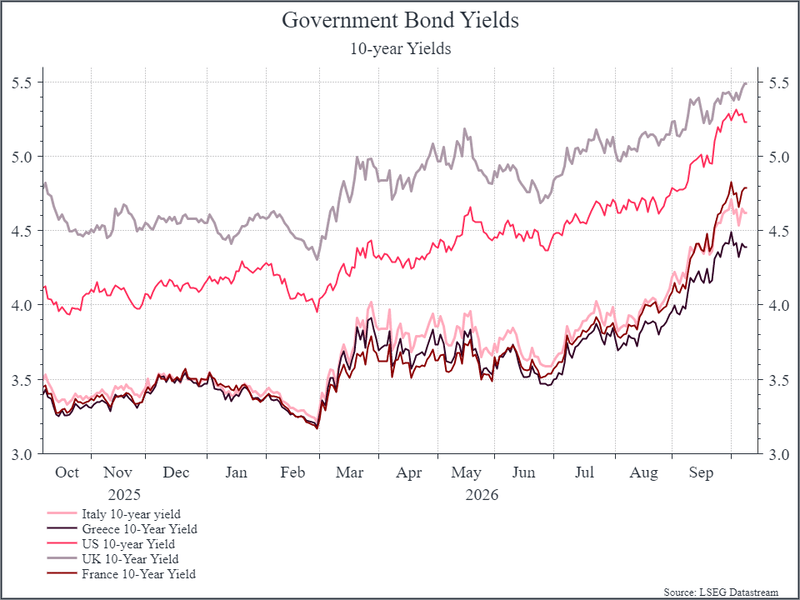
The story is a familiar one: fiscal deficits, rising debt to GDP and ageing populations are a tricky equation for politicians across Europe and the US. If there were easy solutions to this, then they would have already happened. Politics is polarised across much of Europe and there has so far been little appetite for the traditional prescription of lowering government spending and potential tax increases.
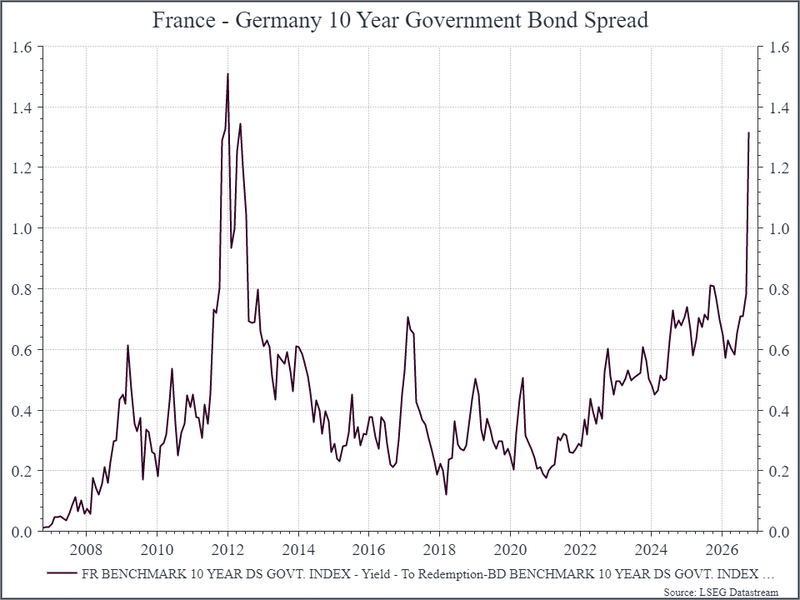
A rising cost of debt is a challenge for many governments running fiscal deficits, but investors have focused on France in recent weeks. The chart below shows how much the cost of debt for France has increased compared to Germany. It’s almost back to where we were in the Eurozone crisis of 2012.
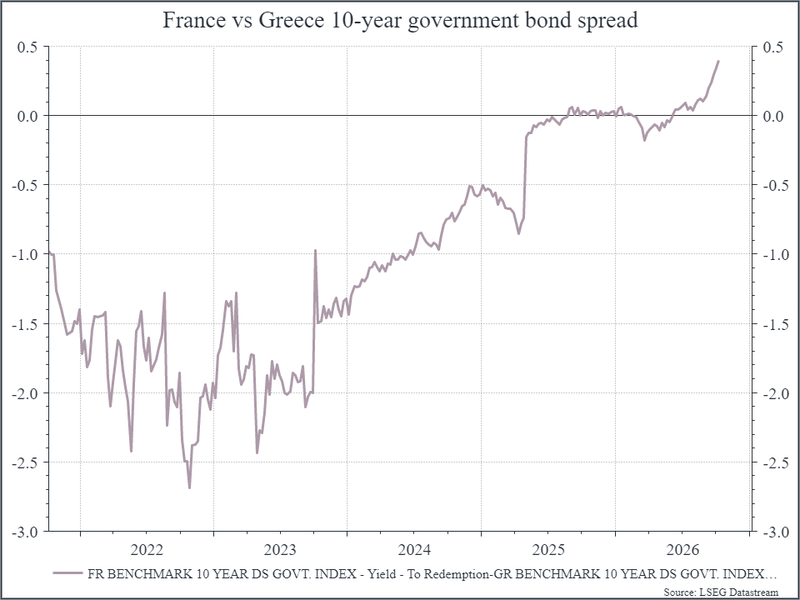
It’s also notable that investors now demand a higher return to lend to France than to Greece.
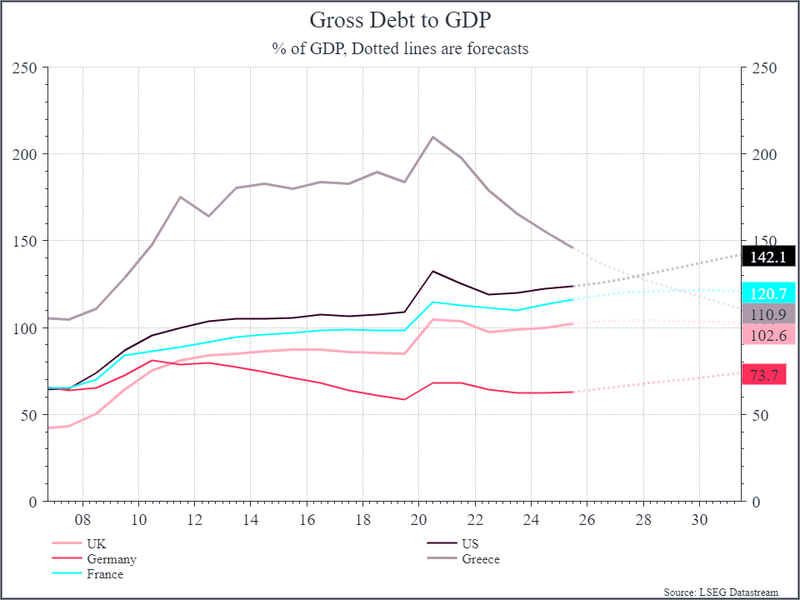
This is interesting because it should remind us that the situation can be resolved. On some metrics, the fiscal situation in Greece is moving in the right direction, albeit from high levels. The chart below shows government debt as a percentage of GDP – including a forecast from the International Monetary Fund. It shows a sharp improvement in Greek debt to GDP, in contrast to the other countries, where debt to GDP is moving higher. There’s lots of debate about the costs of making that change to the Greek economy, but from an investor perspective, the improvement has been notable.
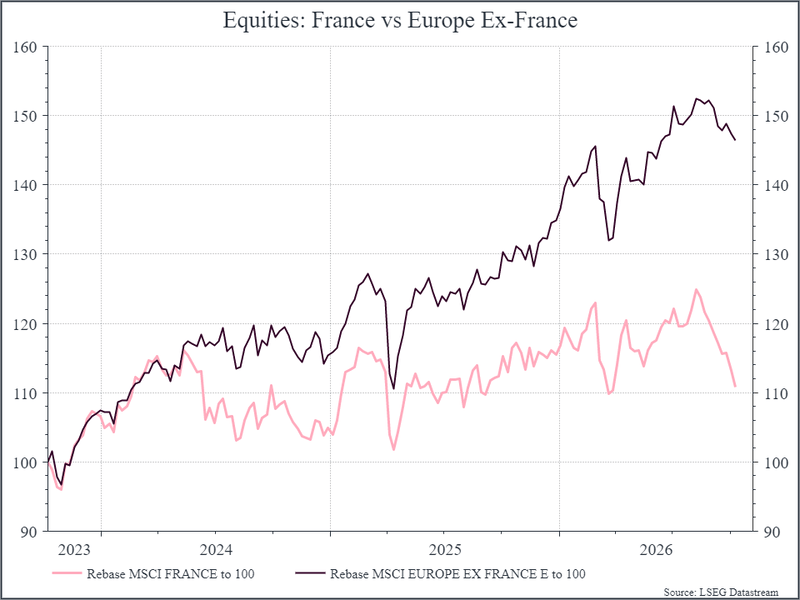
Uncertainty around government finances has spilled into the equity market. The chart below shows the relative underperformance of French equities compared to the rest of Europe since the 2024 French legislative election.
Looking forward, there are a few things to keep an eye on. We’ll have negotiations over the French budget coming up next week. Those are likely to be challenging, but that should be well understood. Oil prices have driven some of the rise in yields, and any improvement in oil supply could prompt some relief in European rates. In terms of policy, the European Central Bank has a range of tools to stabilise bond markets, should the need arise, but for now we think we’re still a bit away from that.
In terms of portfolios, we think we’ve kept the portfolios well-diversified and that has provided some protection during a period of interest rate volatility. We’ve generally kept the duration of our fixed income exposure quite low – favouring short-dated bonds. We’re conscious that yields have risen, so we’re evaluating if there’s an opportunity to buy some longer-dated bonds. We think that volatility in fixed income might stay with us for some time, but higher yields are looking more appealing.
*As with all investing, financial instruments involve inherent risks, including loss of capital, market fluctuations and liquidity risk. Past performance is no guarantee of future results. It is important to consider your risk tolerance and investment objectives before proceeding.