



It seems a long time ago now, but back in April 2025, the US raised trade tariffs aggressively. At the time, there was a lot of discussion about how much damage higher tariffs would do to global trade flows and global growth.
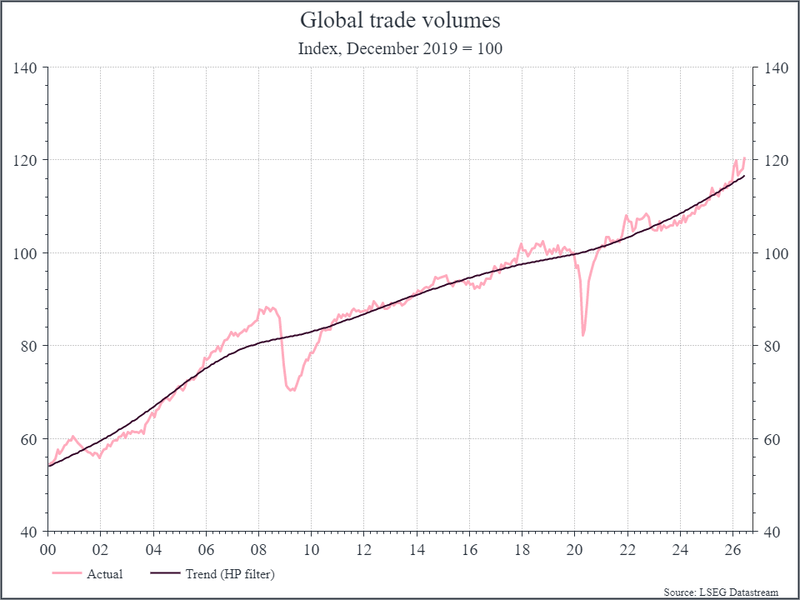
For now at least global trade has held up better than we might have feared a year ago. The chart below shows global trade volumes over the past 25 years. On this measure, global trade volumes are running a little above long-term trends.
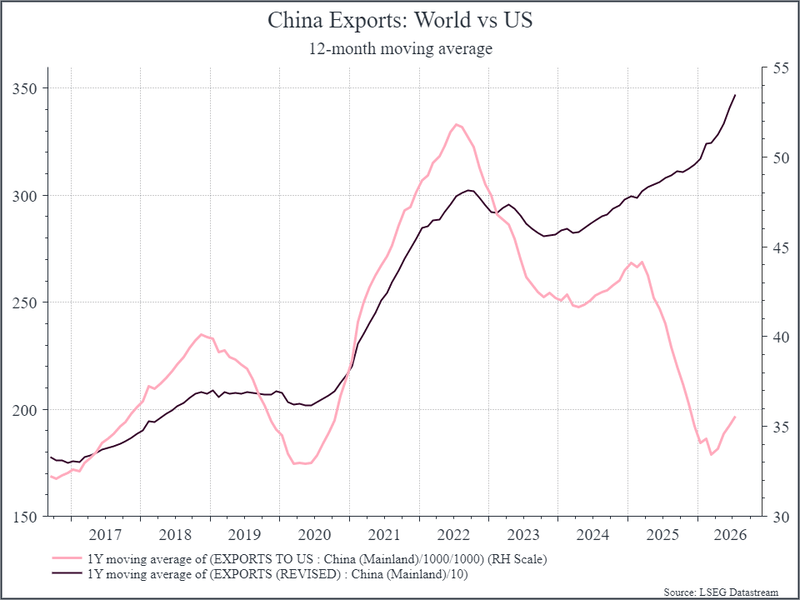
As you’d imagine, China has been an important part of this. The chart below shows Chinese exports globally and to the United States. There was a significant shift in trade flows – away from the US – in the wake of the 2025 tariff increases. In recent months, though, we’ve seen an increase in Chinese exports to the US. We think that’s a combination of increasing demand for capital goods, related to Artificial Intelligence (AI), and to legal challenges against US tariff policies.
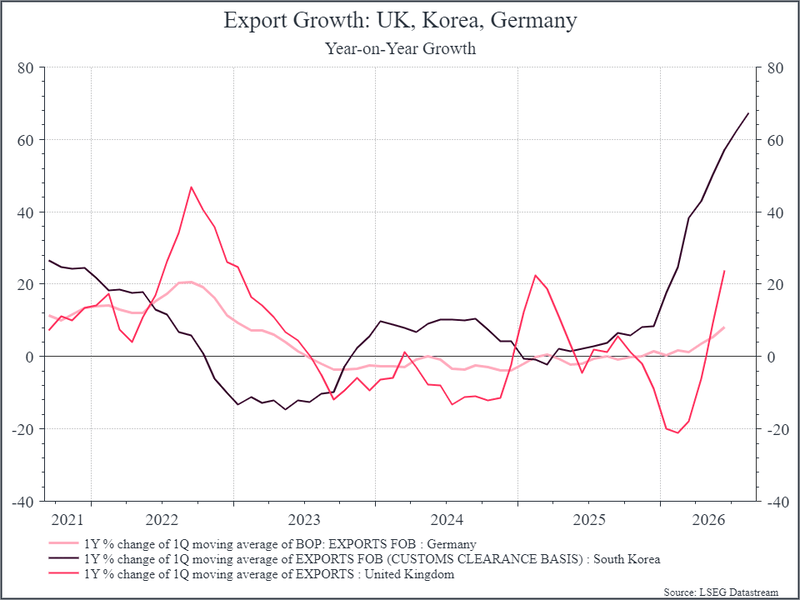
But stronger exports aren’t just a China story. The chart below shows export growth for the UK, Germany and Korea. The impact of the AI boom is clearly reflected in strong Korean export growth, but we’ve also seen export growth accelerating for both the UK and Germany in recent months.
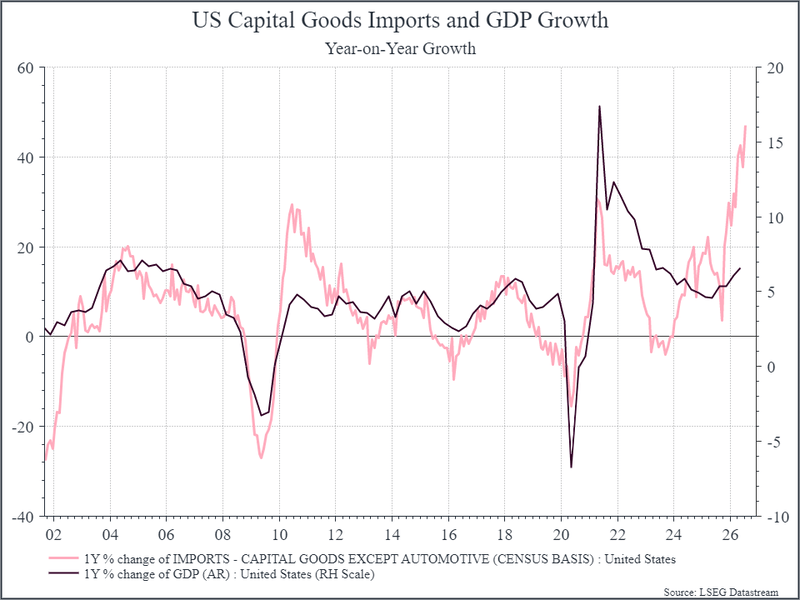
Where are these exports going? The US is still an important destination. The chart below shows the growth in imports of capital goods to the US, which are typically used in new manufacturing facilities. Growth in capital goods imports has correlated pretty well in the past with GDP growth. We’ve seen a significant acceleration in recent months, suggesting that US economic growth should hold up quite well going forward.
What does it mean for markets? Generally speaking you’d argue that stronger exports should mean stronger global growth and better corporate earnings.
This relationship seems to hold pretty well for Emerging Markets (EM) in particular. The chart below compares the growth in EM exports with earnings growth for these markets’ equities over time.
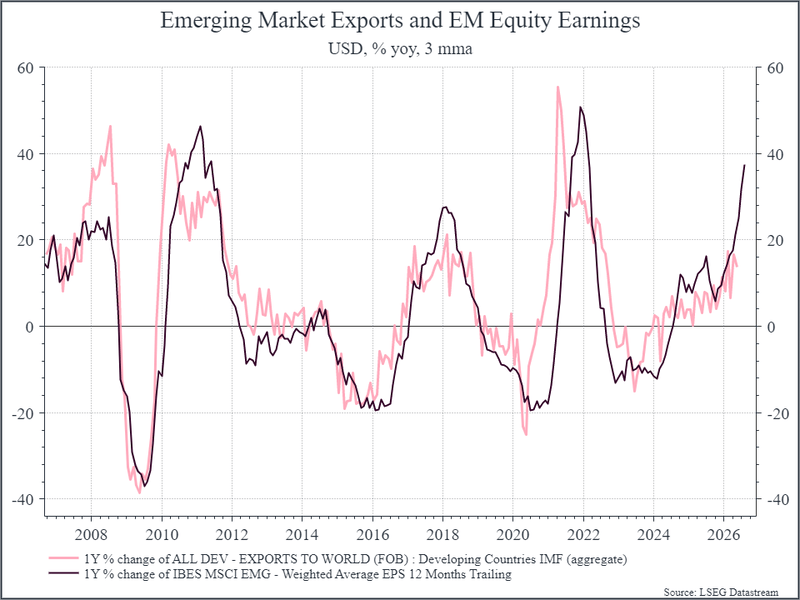
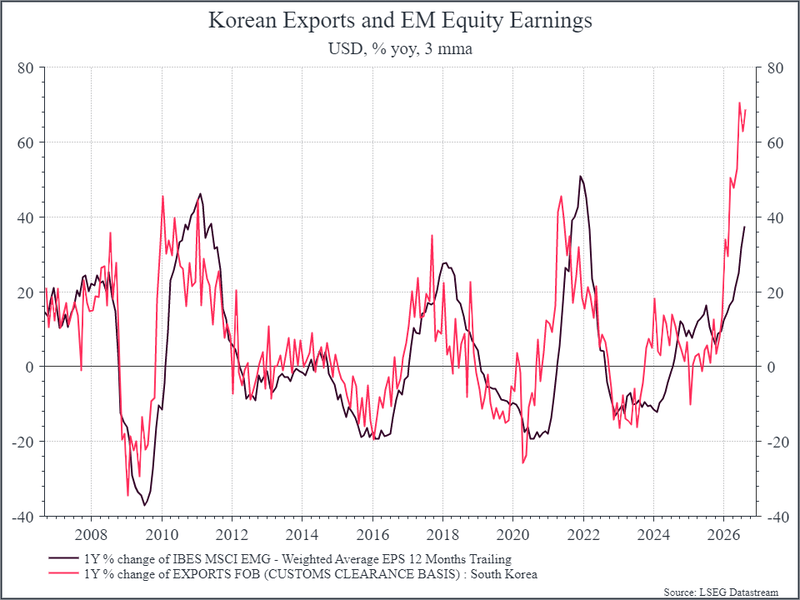
In 2026, it looks like EM earnings have grown even faster than export growth would suggest. We think that reflects the increasing importance of technology in Emerging Markets earnings. Replacing EM exports with Korean exports in this chart highlights the point, given the weight of tech hardware in Korean exports. Korean exports attract attention partly for their tech exposure, but also because they are among the most up-to-date macro data releases – coming usually only a few days after the end of the month.
So where does this get us? In a world with so much uncertainty, this trade data highlights some areas of strength in the global economy over the past few months. We think it also highlights how the AI theme is driving macroeconomic data as well as financial market returns. Spending on AI might account for close to half of current US GDP growth, according to some estimates. It remains a key focus of attention as we think about how to manage our exposure to this important trend.
*As with all investing, financial instruments involve inherent risks, including loss of capital, market fluctuations and liquidity risk. Past performance is no guarantee of future results. It is important to consider your risk tolerance and investment objectives before proceeding.