





“Breathing space” was the catchphrase for this year’s Budget, focused on giving UK consumers and businesses more assistance with current inflation shocks. But it was also quite an apt phrase for the wealth and saving industry as a whole.
In a ‘post election manifesto’ era where potential (and actual) Budget policy have caused a cacophony of noise around pension contributions allowances, tax free cash allowances, tax rates and ISA policy, this experience was relatively sanguine. Okay, there was the reversal of that Cash ISA allowance, but that in itself was a reversal of a previous bombshell. But we will go into that in more detail.
While there has been far less of a rush to take pension benefits early, that doesn’t mean this Budget had nothing of significance for savers.
Reinstating the Cash ISA allowance
Perhaps the more sceptical amongst you might speculate that the government just simply wasn’t ready for this policy, too many unanswered questions about what qualified as ‘cash’, nonetheless this is a meaningful U-turn.
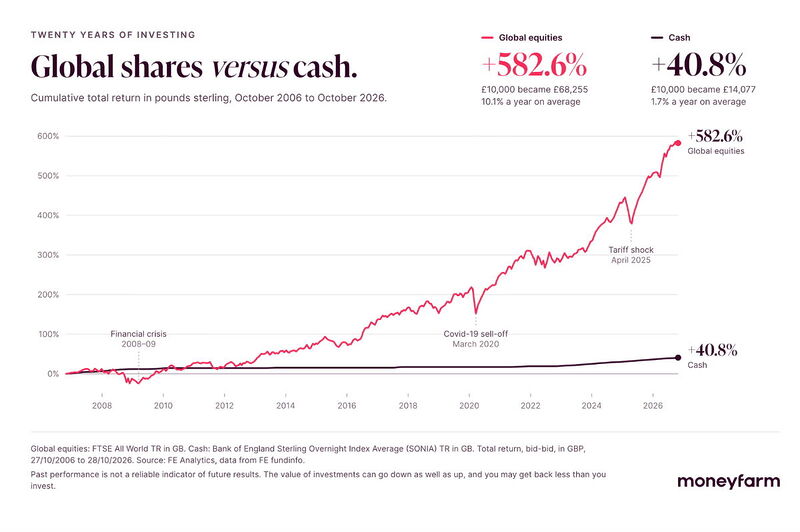
The intention behind this original policy to get more investing was a good one. Whilst it’s debatable how much of this money would have fed to UK companies for growth, the population of the UK still holds far too much cash – £1.98tn is sat in cash savings according to Forbes.
Below you can see the danger of holding too much cash over the long term, looking over the last 20 years. Cash obviously remains a key tool for short term savings and investing comes with risk.
This policy switch seems to have caused uproar around the industry, particularly as something like changing technical restrictions on contributions within a platform and reporting etc, is no small feat. So a lot of time and energy has been spent/wasted on making changes which will no longer come to fruition. It’s also unhelpful for savers, who are constantly having allowances changed and needing to change plans accordingly.
So whilst perhaps a return to something more simple might be welcomed by some, it takes a big step back in the key aim of trying to get more people investing, which is actually fundamental for making sure people are prepared for their futures. Without the tax incentive, I’m dubious about how much impact some adverts with a squirrel will have by themselves.
More ISAs, more choice?
The Help to Buy ISA became the Lifetime ISA (LISA), and which now becomes First Time Buyer ISA, with no major overhaul to the rules. The most common issue with the Lifetime ISA is that the threshold price of a property that you can buy with the money is quite limiting. However, instead of simply raising the price allowed and keeping the LISA, the government has created a new ISA category, which is exactly the same except it simply allows customers to get their money back out of it if they can’t find a home in the price bracket. Not the most revolutionary.
On top of this, there is a new ISA being touted. The new Starter ISA, designed to get people investing, sounds like an attempt to counteract the reversal of the Cash ISA allowance. Whilst we support anything that gets more people investing, as highlighted above, the addition of another ISA has raised some eyebrows. Let’s see what details come out about this, but there is no doubt that there is more complexity.
Taxes
There was a lot of noise in the run up to the Budget about equalising capital gains tax to income tax, or at least increasing it. In the end, this didn’t materialise (with extra reliefs added for entrepreneurs). This is definitely a win for those building wealth through investments outside of their tax wrappers. On top of this, there was actually a small increase in tax on savings and rental income.
This can be quite relevant. Income tax on savings is already quite a lot higher than capital gains and as such is very relevant for people with savings outside of tax wrappers, particularly higher and additional tax rate payers. Whilst, on the surface, a cash product can offer 3.5% to 4%, the reality can be that this in fact is 1.96% or 2.24% once you have then paid tax, which is probably not keeping pace with inflation. It’s not clear in the Budget documentation, but it could well be that this is also relevant for bond-based investments as well.
So it’s very relevant about how to structure your assets outside of tax wrappers. If you want to discuss this with our team, I would highly recommend reaching out to our friendly and accessible Wealth Managers for a discussion about your situation.
But it seems to be a clear signal from the Chancellor that he does want to promote more investment and wealth creation, which in general is certainly positive.
Pensions
This was a mercifully quiet Budget for pensions. No changes to rules on private pensions is very welcome and it still remains a very attractive product. The fact of being able to contribute up to £60,000 a year into a tax-free wrapper, with tax relief provided to boost contributions makes this still a very appealing and crucial tool for building for retirement.
Whilst not in this Budget, the imminent change that it will soon be included as part of the estate for inheritance tax can change its use case quite meaningfully and we will come back to this topic in later pieces.
But for private pensions, this budget was a welcome relief.
Which is good, as there was confirmation of initial rumblings around relaxing the triple lock. Whilst this early step is not a major change, there are still three locks in place, it signals a step down a path that many feel is inevitable. With a rapidly ageing population, the State pension will begin to put some serious pressure on the public coffers and it’s definitely not unlikely that further changes will be made in the future.
This makes it even more important for people to plan ahead, whether through private pensions or other savings vehicles such as ISAs.
So this was very much a Budget of small wins and trying not to make too big a splash. Something you would argue that it achieved. A focus on energy makes sense, not just to help households, but the high cost of energy that the UK faces (compared to other G7 countries) is generally touted as one of its biggest blockers to growth.
So savers and investors were largely left alone in this Budget, some breathing space as promised.
If you would like to discuss any of the points covered in the Budget or this article, we encourage you to get in touch with our team.
Please remember that when investing, your capital is at risk. The value of your portfolio with Moneyfarm can go down as well as up and you may get back less than you invest. Past performance is not a reliable indicator of future performance. Tax treatment depends on your individual circumstances and may be subject to change in the future. The views expressed here should not be taken as a recommendation, tax advice or forecast. If you are unsure investing is the right choice for you, please seek financial advice.
*As with all investing, financial instruments involve inherent risks, including loss of capital, market fluctuations and liquidity risk. Past performance is no guarantee of future results. It is important to consider your risk tolerance and investment objectives before proceeding.