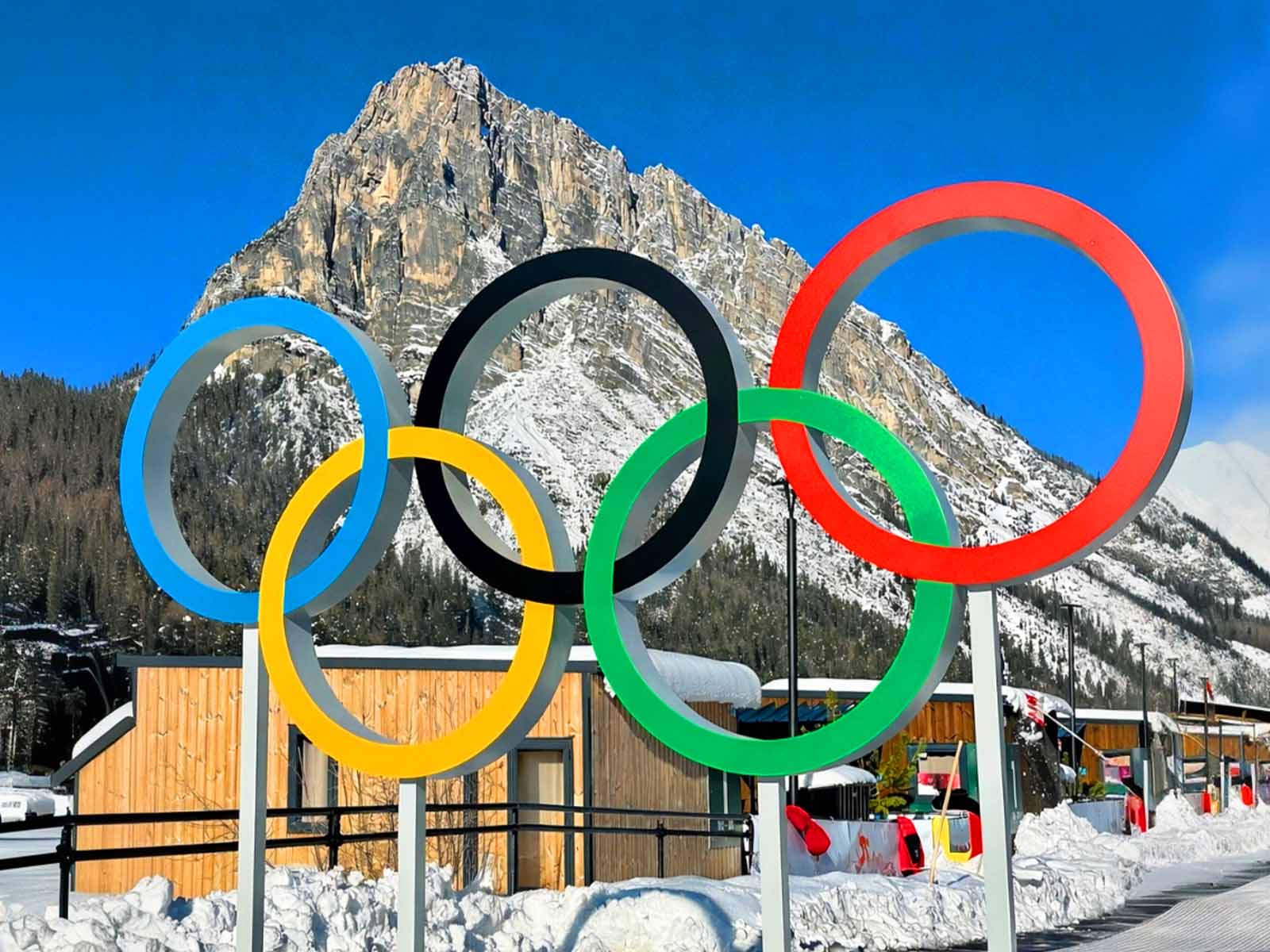





Per much of their history, winter sports have been a fragile, almost accidental phenomenon. To practise them, three non-negotiable variables must converge: geography, climate and timing. Without mountains, without cold weather and outside a narrow seasonal window, they simply do not exist. For this very reason, it is striking to observe how a phenomenon born at the margins, limited in space and time, has transformed into a global economic and cultural industry.
The first Winter Olympics reflected this nature. Chamonix 1924 Winter Olympics was more an experiment than a global spectacle, with few athletes, modest crowds and minimal commercial impact. For decades, these disciplines remained anchored to Alpine and Nordic economies.
Over the past twenty years, however, the sector has changed scale. Global audiences have grown structurally, supported by rising media rights values and digital distribution, which have transformed seasonal events into year-round content. Olympic broadcasting rights have moved from hundreds of millions in the early 2000s to multi-year contracts worth several billions. Mountain tourism has also expanded, making the experience of snow accessible to an international public.
China provides an emblematic case. Before Beijing’s successful bid for the 2022 Winter Olympics, skiing was marginal; within a few years, targeted public policies and the Olympic effect engaged hundreds of millions of participants. It is testimony to the extraordinary appeal of these disciplines, capable of captivating viewers who have never seen snow in person.
Part of that appeal likely stems from the fact that winter sports are, in an almost literal sense, a continuous negotiation with the laws of physics. This peculiarity makes them both complex and accessible. In many disciplines, athletic performance is an exercise in risk management within non-negotiable constraints: gravity, friction, snow resistance, centrifugal force.
Financial markets are subject to structural forces that cannot be ignored. Success depends on the ability to operate effectively within constraints that inevitably remain beyond our control. In recent weeks, we too have found ourselves glued to the television, captivated by the magic of winter sport. Almost inevitably, we began to draw parallels with what we do every day. In this article – without excessive seriousness – we explore some of the ideas and lessons we encountered along the way, on snow and ice.
1. Tailored routines: risk and reward in figure skating and snowboard
The key to successful investing is finding the right balance between risk and return. In certain Olympic sports, such as figure skating and freestyle snowboarding, this principle is embedded directly in the rules of competition, making risk assessment a fundamental strategic element.
In figure skating, for instance, each jump carries a base score that increases according to difficulty and number of rotations. A triple jump may have a base value ranging roughly between four and eight points, depending on its type. A quadruple jump often exceeds ten base points. The quadruple Axel – involving four and a half rotations in the air – is the most complex element ever executed in competition and carries an even higher base value.
Yet the base value represents only theoretical potential. To translate it into an actual score, the Grade of Execution (GOE) comes into play, significantly increasing or reducing the result depending on the quality of execution. A fall also incurs a specific deduction, which can quickly erode the technical advantage built up. At the 2026 Winter Olympics, the favourite for the men’s figure skating title, Ilia Malinin, presented a programme of unprecedented technical difficulty but ultimately missed out on a medal following several falls.
This scoring system introduces a strategic dimension to performance-related risk management, closely resembling the trade-off between risk and return in investing. The objective is not always to maximise difficulty, but to optimise it relative to one’s probability of success. Athletes incorporate high-risk elements only when training consistency makes the expected value positive. The routine thus becomes a balanced construction – much like a diversified portfolio: a solid base of reliable elements, a few higher-return choices, and an overall structure aligned with one’s capacity to absorb error.
2. The balance between speed and stability: bobsleigh and skeleton
In bobsleigh and skeleton, stability through corners depends on precise physical balance, supported by speed. Tracks are designed with banked curves: when the sled enters at high speed (exceeding 120 km/h in four-man bobsleigh), centrifugal force generates a lateral component which, combined with the incline of the wall, keeps the sled aligned with its trajectory. If speed is too low, centrifugal force is insufficient to sustain the sled along the curve, and the vehicle may lose grip or even overturn. It is a counterintuitive phenomenon, reminding us that going too slowly is not always synonymous with greater safety.
The principle is similar in investing. An overly conservative portfolio may give the impression of safety, yet fail to generate sufficient real return to offset inflation and long-term objectives. Conversely, excessive risk exposure may produce volatility incompatible with one’s capacity to absorb losses.
3. The weight of key moments: the lesson of biathlon
In biathlon, which alternates long stretches of cross-country skiing with brief precision shooting stages, rankings are often decided at the shooting range rather than on the skis. During a race, most effort is devoted to covering long distances at high heart rates. Yet saving a few seconds when hitting five targets from 50 metres – with penalties for misses – can determine victory or defeat. In sprint or pursuit events, where final gaps are often under thirty seconds, a single missed target can cost several positions.
World Cup statistics show that athletes with average skiing times can finish in the top ten thanks to a “clean sheet”. The decisive moment is concentrated in a few seconds, often carrying more weight than the long minutes spent labouring on the course. Athletes sometimes deliberately moderate their pace in order to arrive at the range more composed.
Financial markets operate similarly. A substantial share of long-term returns is concentrated in a small number of trading days. Historical analysis of the S&P 500 shows that the impact of the best days is disproportionate relative to the overall average. An investor fully invested in the index would have achieved cumulative returns exceeding 1,000%; missing just the ten best days would have more than halved the final result, while missing thirty would have reduced returns by over 80%. Being absent from the market during key moments weighs more heavily than many intermediate phases. Not every trading day carries equal importance; being positioned for decisive moments can make the difference between success and failure.
4. Curling: from strategy to execution through teamwork
Curling is undoubtedly one of the most fascinating winter sports. One of its most compelling dynamics is the speed with which teams move from strategy to tactics to execution through a structured collective process. Curling is a game of chess played on ice. Each “end” is a planned sequence of shots that must take into account the position of the stones, the order of play and score management. The overarching strategy is defined in real time, depending on the score and the stage of the match.
The role of the skip, who sets the game plan and calls the shots, is central. According to analysis by the World Curling Federation, teams with a higher percentage of shot accuracy in the final two stones of an end display a significant competitive advantage. Yet those final deliveries are merely the outcome of a strategy built progressively beforehand. Defining the plan is never a solitary act. Before each stone is delivered, a brief exchange takes place between skip, vice-skip and thrower. It is a dialogic process that closely resembles the workings of an investment committee: leadership is clear, but the decision emerges from a structured comparison of information and scenarios.
Once the skip has made the call, however, responsibility becomes distributed. The delivery requires a precise combination of line (initial direction) and weight (speed), calibrated to within a few millimetres. Even the slightest variation in release can alter the entire trajectory. This is where sweeping comes into play. Studies conducted in recent years have shown that sweeping, by temporarily increasing the surface temperature of the ice, can reduce friction and extend the stone’s travel by as much as one or two metres, while also influencing its final curl.
Curling thus demonstrates that strategy is not a rigid blueprint, but a framework that requires continuous operational adjustments – a process that closely mirrors the work carried out by an investment team.
5. The memorable anomaly: the Bradbury effect
In short-track speed skating, contact between athletes is frequent and multi-skater falls are part of the competitive dynamic. However, what occurred at the 2002 Winter Olympics was a statistical exception. In the 1,000-metre final, Steven Bradbury, who had reached the final partly through favourable incidents in earlier rounds, was clearly last entering the final bend. In a matter of seconds, the four skaters ahead collided and fell; Bradbury, having remained clear of the crash, crossed the line first to win gold.
The episode has become emblematic of the outsider triumphing against all expectations. Yet it is memorable precisely because it breaks the rule. In short track, in the vast majority of races, the technically superior athlete prevails. The outsider’s victory remains an anomaly.
Financial markets exhibit a similar dynamic. Complex systems occasionally generate rare events – low probability yet high impact – that remain vivid in collective memory and shape perception.
This asymmetry can fuel cognitive biases, such as excessive emphasis on extreme episodes, underestimation of risk or confirmation bias. Building a strategy that overestimates the frequency of an exceptional event can be highly dangerous – often more than ignoring the possibility that it will happen.
*As with all investing, financial instruments involve inherent risks, including loss of capital, market fluctuations and liquidity risk. Past performance is no guarantee of future results. It is important to consider your risk tolerance and investment objectives before proceeding.