





With so much focus on conflict in the Middle East, we wanted to consider other themes developing in the equity market.
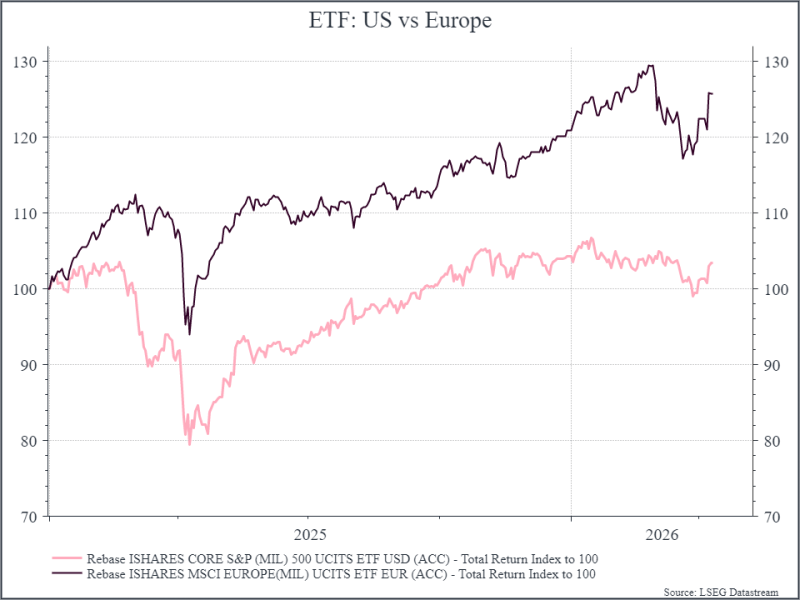
One notable point has been the relative performance of US and European equities. As is often the case, a lot depends on the time frame you consider. Since the end of 2024, European equities have outperformed (and over the past six months). That partly reflected temporary exuberance following the Republican electoral victory, followed by the disappointment over higher tariffs.
But we think that the shift in valuations is very interesting. The chart below shows the valuation of US equities relative to Europe over the past decade. We saw a steady re-rating of US equities between 2016 and 2024, driven by strong growth and improving profitability, particularly in the tech space.
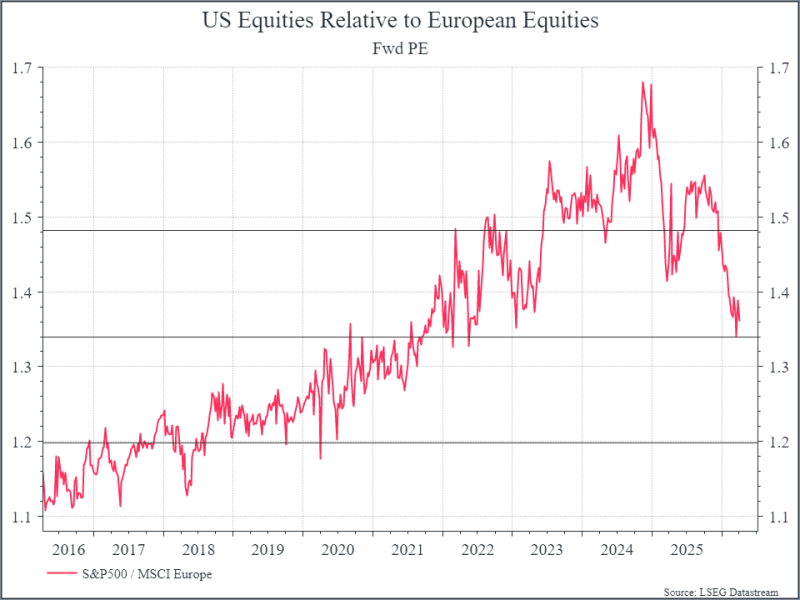
Since mid-2024, however, we’ve seen a pretty sharp reversal, with US equities de-rating compared to Europe. That was partly because European stocks outperformed, but US equities also continued to show stronger earnings growth than their European peers (see chart below). It’s worth remembering that European earnings growth in 2025 was pretty muted, even if that didn’t prevent European equities from rallying.
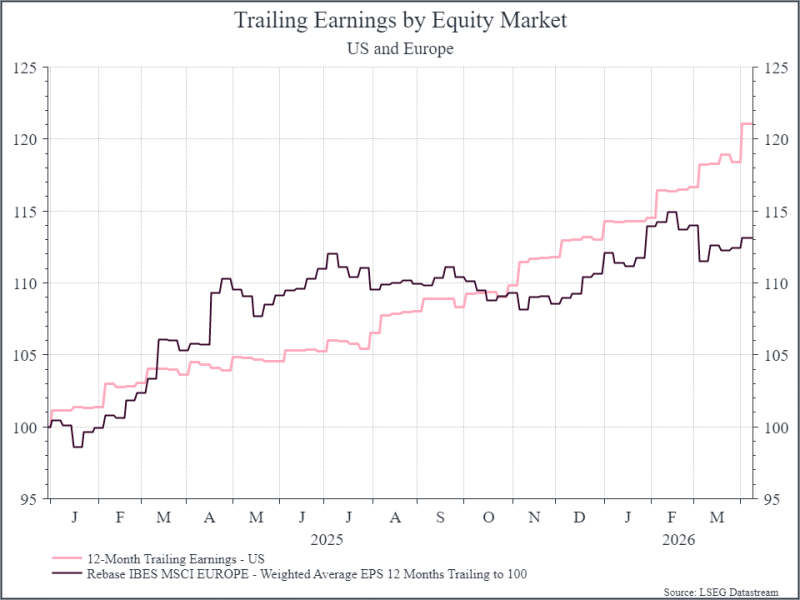
Where does this leave us? US equities have de-rated quite sharply compared to Europe, but they remain at a pretty healthy valuation premium. We think that valuation premium reflects a history of stronger growth and higher profitability – and expectations that those trends will continue, particularly given the huge focus on Artificial Intelligence.
Analysts expect strong earnings growth for both the US and Europe this year, and that might be too optimistic if the global economy slows. In that scenario, US earnings might prove more resilient than those in Europe, as was the case in 2025 – and that, combined with a cheaper relative valuation, might leave US equities looking more attractive as the year progresses.
*As with all investing, financial instruments involve inherent risks, including loss of capital, market fluctuations and liquidity risk. Past performance is no guarantee of future results. It is important to consider your risk tolerance and investment objectives before proceeding.