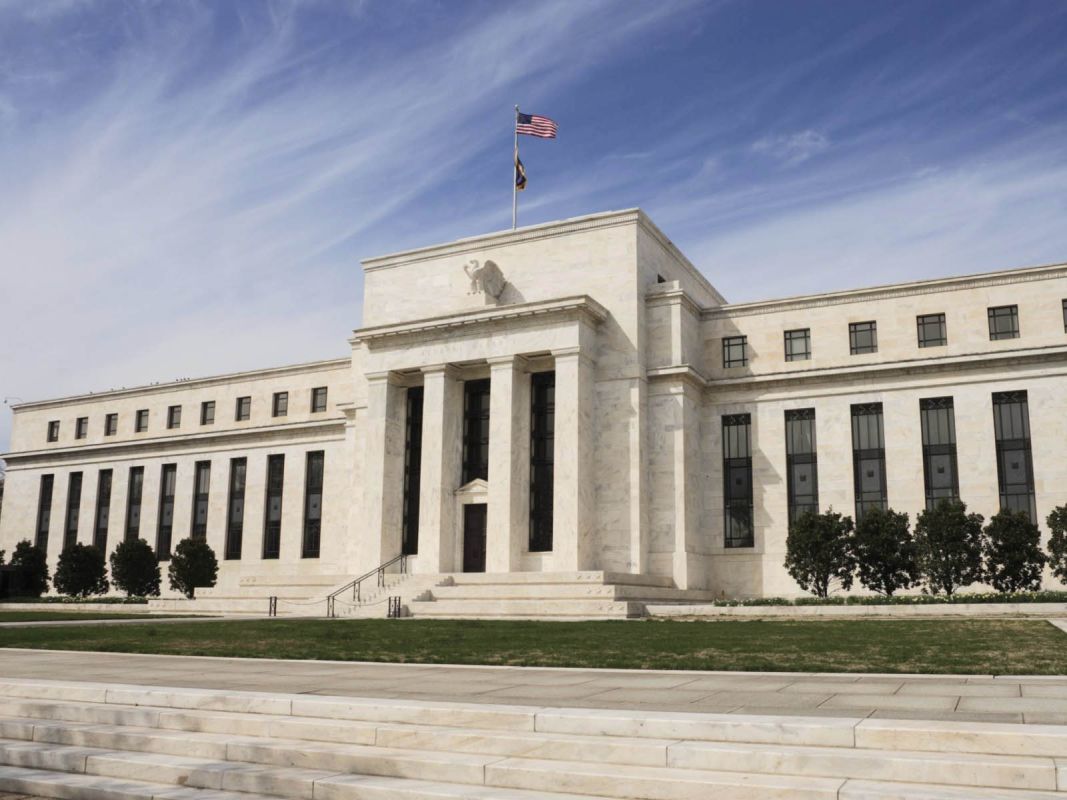





The US Federal Reserve (Fed) met on Wednesday to deliver its final monetary policy decision of the year. At the same time, members of the rate-setting committee released their latest economic forecasts for the coming years. We wanted to dig into all of this in a bit more detail.
The headline was largely as anticipated. Investors expected the Federal Reserve to cut its policy rate by 25 bps and Chair Jerome Powell and his colleagues delivered on that. At the same time, the Fed signalled that the policy rate is “within a broad range of estimates of neutral”. That’s central-bank speak for “we might not be cutting rates again for a while”.
Reading the commentary, Chair Powell highlighted the challenging combination of above-target inflation and a weakening labour market, but emphasised that the labour market is the Fed’s current focus of attention, and that warranted a cut in rates. In his comments, he highlighted that job growth could actually be negative at the moment, somewhat weaker than official figures suggest.
For some of us, the Fed’s economic projections made for interesting reading. These estimates are the aggregate of individual forecasts made by each Fed governor. Compared to the September forecast, their outlook for economic growth in 2026 has improved markedly: the Fed members now expect 2.3% growth for next year, compared to 1.8%.
At the same time, their forecast for inflation in 2026 has fallen from 2.6% in their September estimates to 2.4% in December. We’d argue that’s a pretty positive outlook, even if we should be wary of putting too much emphasis on a set of forecasts – even from the Federal Reserve.
When it comes to policy rates, the outlook remained unchanged. On average, the members expect maybe one rate cut in 2026. But looking at the individual estimates, it looks like a couple of the participants considered that we could see a hike in the policy rate in 2026. At this point, a rate increase in the US in 2026 would be a surprise, although if GDP growth really does accelerate in the way the Fed expects, and unemployment drifts lower, then it could be more likely.
There’s another point to highlight. The Fed announced that it would start purchasing Treasury bills in order to make sure that there is an “ample supply of reserves in the system”. It was an announcement that analyst had largely expected, but it still highlights that there has been some pressure in funding markets in the US – reflected in some volatility in money market rates. It differs somewhat from Quantitative Easing, through which the Fed previously purchased longer-dated bonds. It’s reassuring to see the central bank reacting proactively, particularly as we head into the end of the year, but it is something we’ll continue to monitor.
Where does this all get us? As always there are a lot of moving parts, but some key elements emerge. The Fed cut rates as expected on the back of signs of a weaker labour market, which could be weaker than official figures suggest. They indicated that the current policy rate is around neutral, suggesting that a meaningful shift in rates will require a change in the macro outlook.
The combination of above-target inflation and a weaker labour market remains a tricky challenge for policy makers. That said, their latest macro forecasts are pretty optimistic – raising their estimate for economic growth next year, while lowering their forecast for inflation. That’s a pretty constructive outlook for financial assets, if their forecasts prove correct.
*As with all investing, financial instruments involve inherent risks, including loss of capital, market fluctuations and liquidity risk. Past performance is no guarantee of future results. It is important to consider your risk tolerance and investment objectives before proceeding.