





It’s been a busy couple of weeks for Central bankers. Last week, the European Central Bank (ECB) hiked its policy rate for the second time this year. This week, the US Federal Reserve raised its policy rate for the first time since 2023. The Bank of England failed to follow suit, with policy makers electing to leave rates unchanged. We wanted to dig into all this in a bit more detail.
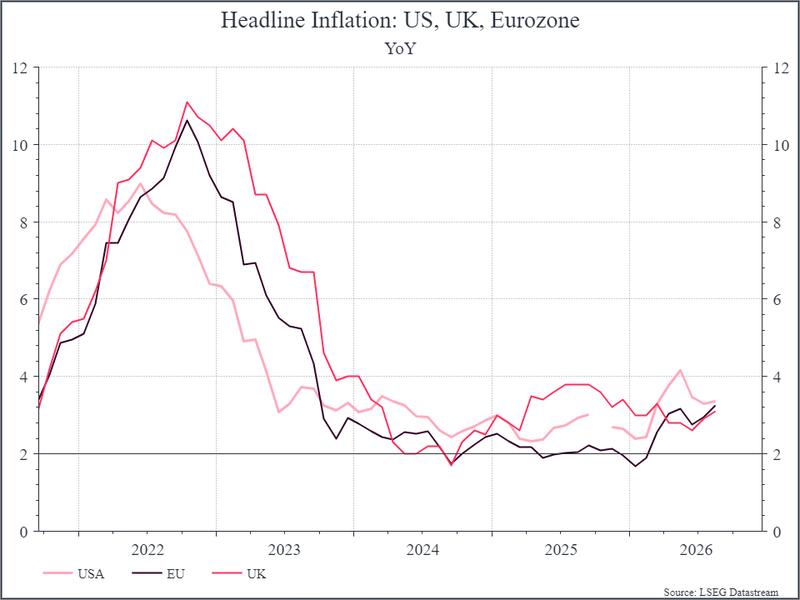
Let’s start with inflation. Central banks typically target 2% annual inflation. There’s lots of debate about why that number. But, when the dust settles, for now at least, the target is consumer price increases of 2%. And, as the chart below shows, inflation is running about that number and has been accelerating. All else equal, that normally means higher policy rates.
Inevitably there are nuances. The major nuance, as we’ve noted before, is that oil prices can have a significant impact on inflation and that’s something that central bankers can’t do much about. The chart below shows the relationship between oil and US consumer prices.
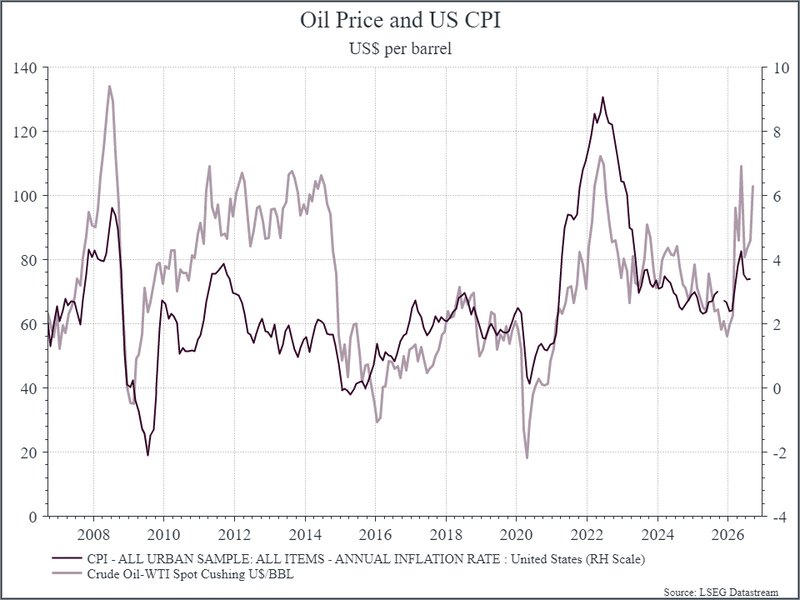
Usually, central bankers try to look past a supply shock like the one we’ve experienced, but if that shock (i.e. higher oil prices) persists for long enough, they usually feel obliged to act.
So, let’s come back to the recent decisions. Starting with the Eurozone, the ECBs decision was perhaps the simplest. The ECBs primary job is to keep inflation at target, and it has an institutional history focused on that mandate. The US Federal Reserve, in contrast, has a dual mandate of full employment and stable prices. Headline inflation is above target and looks set to stay there, so the ECB hikes rate. Investors expect to see more hikes in the future.
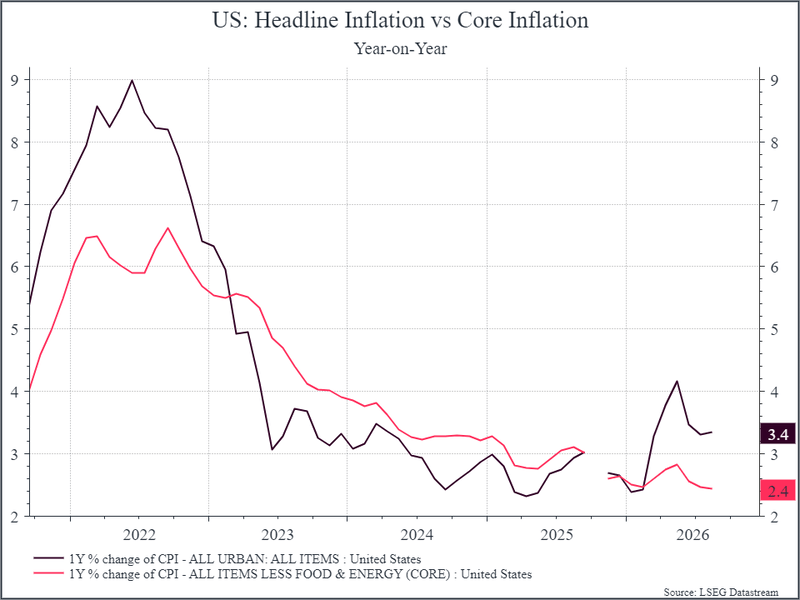
The decision of the US Federal Reserves was a bit more complicated for a couple of reasons. First, the US administration has been more open about expressing its preference for lower interest rates. Second, some analysts have noted that if you exclude more volatile items like food and energy, US inflation (so-called core inflation) has been comparatively well-behaved – still above 2% but heading in the right direction. From that perspective, you could make the case that a rate hike now is unnecessary.
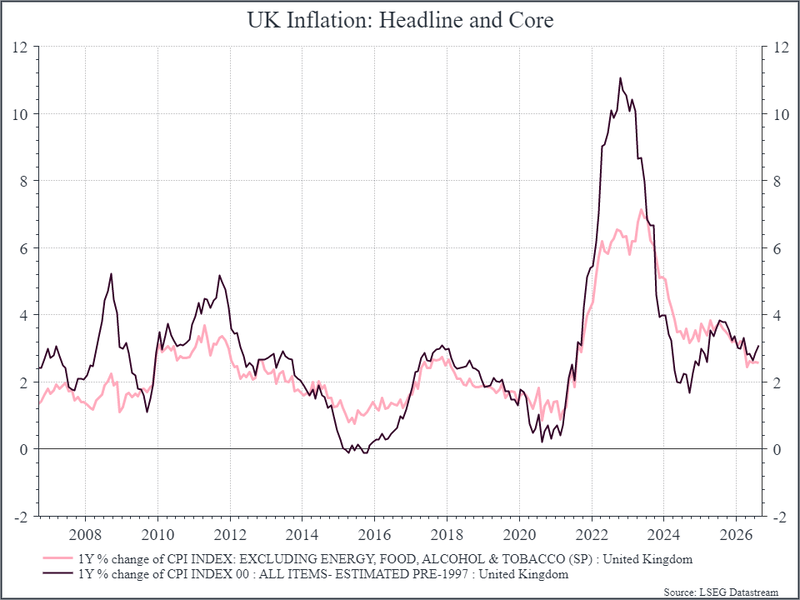
Finally, there’s the UK. Policy makers in the UK took a different stance this time around. They acknowledged the risks from higher oil prices but chose to keep rates unchanged at this point, even if three of the nine committee members voted to hike rates. Investors are expecting the Bank of England to hike rates in the coming months. The chart below shows core and headline inflation in the UK. There’s very little to choose between them at this point, unlike in the US. You’d think that the relatively weak UK growth outlook and decelerating wage growth also played a role in the Bank’s thinking.
In some ways, the more interesting part of the Bank of England’s statement was around their holdings of UK government bonds. After the Global Financial Crisis, and again during Covid, a number of central banks bought their government debt in order to stimulate the economy (so-called Quantitative Easing). The ECB, Bank of England and the US central bank have been unwinding those positions in recent years. The Bank of England has taken a more aggressive approach in actually selling UK government bonds in the market, rather than just letting them mature. The chart below shows their holdings over time. These sales have pushed up UK government bond yields (more bonds for sale means lower prices and higher cost of debt).
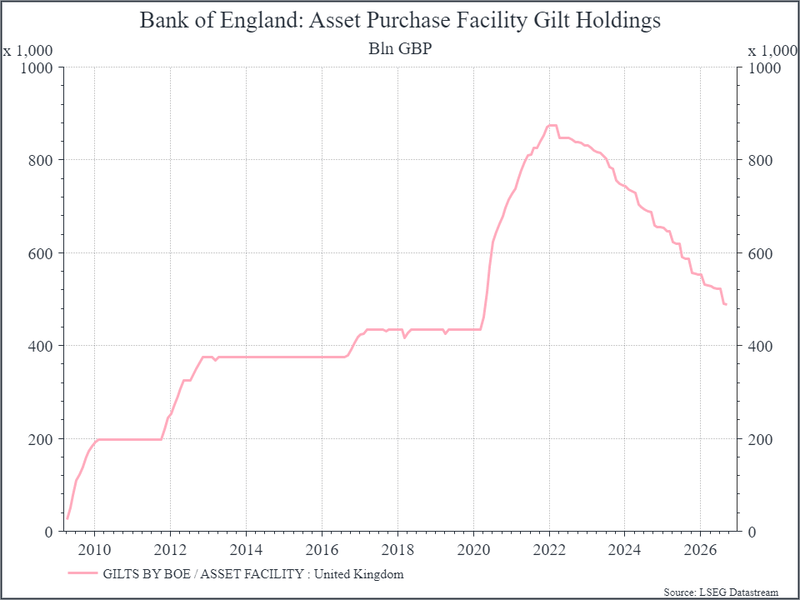
This week, the Bank announced that it would pause its auctions of this debt until April 2027 and then re-start at a slower pace than in the past. On the margin, that should help UK government bond yields.
So where does all this leave us? Central bankers are reacting to higher inflation, regardless of the source, and investors are expecting higher policy rates in the future. On the margin, that should mean tighter monetary policy conditions and possibly slower growth.
One interesting point is on the relationship between policy rates and the yield on longer-dated bonds. We’ve seen longer-dated bond yields rise quite sharply over the past couple of months. We think that partly reflects concern over inflation. You could argue that higher policy rates will give investors comfort that central bankers are focused on inflation. In that case, we could see long-dated yields remain relatively stable even if policy rates rise.
For now, central banks are erring on the side of caution – not willing to bet on a swift resolution to the energy shock of the past few months. We continue to have a bias towards shorter-dated bonds within most of our portfolios. That said, with long-dated bond yields rising and inflation above target, we think investors will view central bank prudence positively, even if it means that rates remain higher for longer.
*As with all investing, financial instruments involve inherent risks, including loss of capital, market fluctuations and liquidity risk. Past performance is no guarantee of future results. It is important to consider your risk tolerance and investment objectives before proceeding.