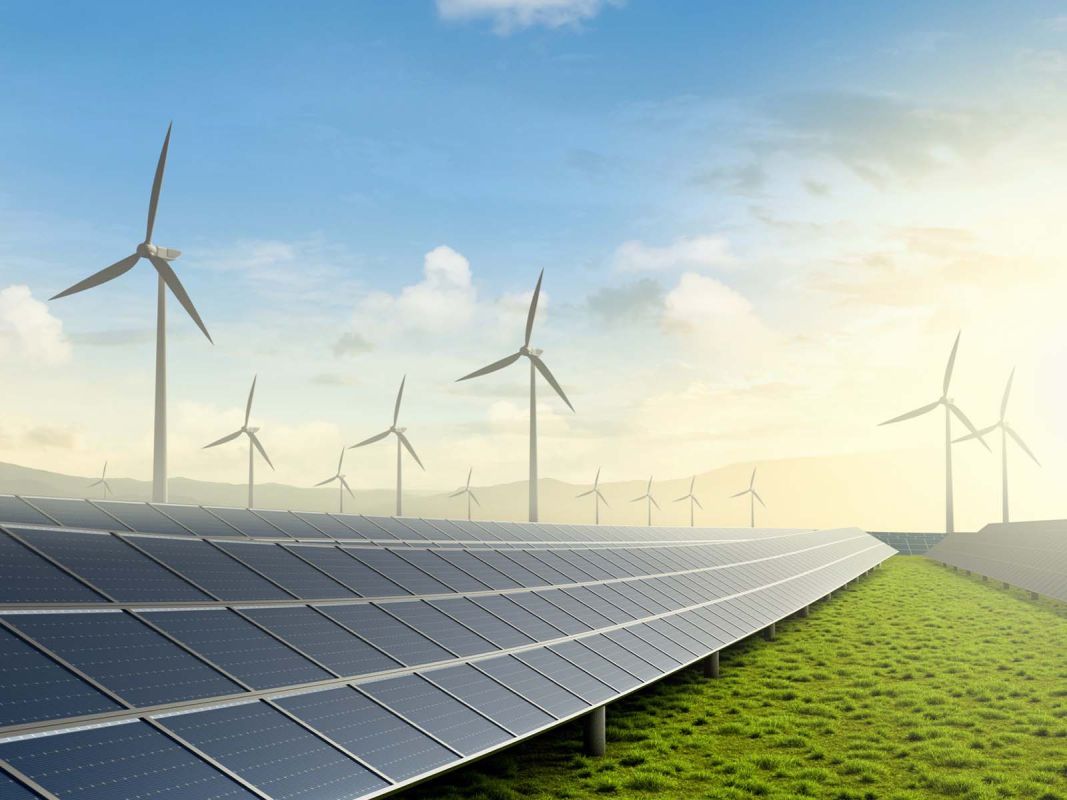





Could the crisis in the Strait of Hormuz become the catalyst needed to move beyond a fossil fuel-based economy and accelerate the energy transition? Today, as Earth Day (22 April) reminds us of the urgency of addressing climate change, those same questions feel more relevant than ever. More than 50 years ago, in the face of another oil crisis, similar questions were already being asked.
In January 1974, European governments introduced measures that evoked wartime economies: car-free Sundays in Germany and the Netherlands, limits on domestic heating in France and the UK, and curfews on illuminated signage.
The energy shock was triggered by a decision from several oil-producing countries to cut crude supply in protest against Western support for Israel following the Yom Kippur War. The economic impact was particularly severe in Europe, but the shift in political and industrial thinking had even more lasting global consequences.
The oil shock exposed a fundamental vulnerability of post-war industrial economies: the assumption that oil – and energy more broadly – would always be available at reasonable prices. Governments and businesses were forced to rethink energy supply, and concepts such as energy security and energy efficiency entered public debate for the first time.
At the time, US President Richard Nixon launched Project Independence, placing energy self-sufficiency at the top of the national agenda. In Europe, countries sought alternatives: Germany turned to coal and Norwegian gas, while France accelerated its nuclear programme. Subsidies for home insulation appeared for the first time, and renewable energy began to enter the policy conversation.
A different world, but familiar risks
Fifty years on, dependence on fossil fuels remains one of the few constants. The tensions around the Strait of Hormuz have once again unsettled energy markets, pushing governments to consider new austerity measures.
Yet the world today is very different from that of 1973. Renewable alternatives are now significantly cheaper, and governments face the additional pressure of the climate crisis, which has already driven substantial public and private investment into clean energy.
This raises a key question: can such a severe oil shock accelerate the transition to renewables?
A transition already underway
Even before the latest geopolitical tensions, the global energy sector was undergoing a profound transformation.
According to the International Energy Agency, global energy investment reached a record $3.3 trillion in 2025, with around $2.2 trillion – two-thirds of the total – allocated to clean technologies, including solar, wind, nuclear, grids, storage and electric mobility.
Solar photovoltaics alone attracted $450 billion, becoming the largest single investment category in the global energy sector, surpassing oil production for the first time.
A decade ago, fossil fuel investment exceeded electricity investment by 30%. Today, the situation has reversed, with electricity receiving 50% more.
Europe: accelerating, but still exposed
In regions more exposed to hydrocarbon price volatility, such as Europe, this shift has been even more pronounced. Following the Russian gas shock in 2022, Europe more than doubled its investment in clean energy, from €185 billion in 2015 to €418 billion in 2025. Wind power has now overtaken natural gas as the continent’s second-largest energy source after nuclear.
The Hormuz crisis could further strengthen political momentum behind the transition. European governments are preparing to formally accelerate the deployment of clean energy to mitigate fossil fuel shocks.
A document approved by the EU Council’s Political and Security Committee in April 2026 identifies the transition to renewables as the optimal response to geopolitical and economic risks linked to fossil fuel dependence. The European Commission is also expected to propose a binding electrification target by summer 2026.
However, the reality is more complex. Renewables accounted for around half of Europe’s electricity generation in 2024 and 2025, yet the economy remains exposed to oil price fluctuations, particularly in transport.
At the same time, Europe must rebuild liquefied natural gas (LNG) reserves after a cold winter, potentially at prices up to 70% higher if Middle East tensions persist. The crisis has also reignited debate over reliance on Russian gas, with EU countries still accounting for a significant share of LNG imports.
The policy dilemma
This highlights a recurring dilemma in energy crises: the need for long-term, strategic transition policies versus the temptation to adopt short-term, cost-effective solutions that reinforce dependence on fossil fuels.
Despite this, renewable investments are already delivering tangible benefits. The European Investment Bank estimates that renewables helped avoid €71 billion in fossil fuel imports in 2022 alone.
Spain offers a compelling case study. Over the past decade, it has more than doubled its wind and solar capacity. In 2019, natural gas set electricity prices 75% of the time; today, that figure has dropped to 16%. As a result, while electricity prices surged across Europe, they stabilised more quickly in Spain.
The role of private investment
A notable and increasingly relevant trend for investors is the response from households and businesses. Across Europe, individuals have reacted to energy volatility by investing directly in the transition.
In the UK, heat pump sales rose by 51% in early March 2026, solar panels by 54%, and EV chargers by 20% (Octopus Energy data). In Germany, demand for solar installations increased by 30%. In France, second-hand electric vehicle sales nearly doubled. In Norway, electric vehicles overtook diesel as the most traded category.
These developments suggest that energy market volatility is not only shaping macroeconomic policy but also driving behavioural change at the consumer level – an important signal for ESG-focused investors.
Asia: a more direct shock
While Europe debates the pace of transition, Asia faces more immediate structural challenges. The region accounts for the majority of oil and LNG flows through the Strait of Hormuz – around 84% of crude oil and 83% of LNG in 2024.
Countries such as China, India, Japan and South Korea are therefore directly exposed. The shock has been more acute than in Europe, which has benefited from diversification since the Russia-Ukraine conflict.
China represents a particularly complex case. It is both highly dependent on Gulf oil and the world’s largest investor in renewables, accounting for nearly one-third of global clean energy investment. The crisis has reinforced Beijing’s dual strategy: accelerating domestic clean energy projects while strengthening its role as a supplier of renewable technologies.
A transition at risk of reversal?
Despite encouraging signs, the transition is not guaranteed. Historically, high energy prices have often triggered increased fossil fuel investment. As supply rises, prices fall, reducing the relative competitiveness of renewables.
In the US, production is already expected to reach record levels, with higher prices accelerating this trend.
Volatility also poses a structural challenge. Renewable projects require long-term revenue visibility – typically over 20 years. Large swings in energy prices can complicate financial planning and delay investment decisions.
At the same time, fossil fuels still account for around 80% of global energy demand, with consumption rising, particularly in emerging markets. Several sectors – shipping, aviation and heavy industry – remain heavily reliant on hydrocarbons.
Winners and losers
In the short term, fossil fuel exporters such as the US and Russia benefit from higher prices.
However, the more compelling investment story lies within the energy transition: renewable utilities, solar and wind manufacturers, battery producers, heat pump and electrification technologies, EV infrastructure.
These sectors are experiencing strong demand, supported by both policy and structural shifts in consumption.
Conclusion
It is too early to declare the end of fossil fuels. However, the current crisis reinforces the direction of travel.
Countries that have invested in renewables – such as Spain and Denmark – have proven more resilient. Others are now facing higher costs. Consumers are also making increasingly structural choices away from fossil fuels.
For investors, this strengthens the case that the energy transition is a long-term structural trend, likely to shape economic and market dynamics for decades. While hydrocarbons will not disappear overnight, sustainability and the transition to cleaner energy remain key drivers of portfolio performance over the medium to long term.
Our ESG approach
Our ESG portfolios are designed for investors seeking long-term returns without compromising on sustainability values.
Since 2020, we have structured our portfolios according to strict criteria to reduce greenwashing risk, in line with our Responsible Investment Policy. Our objective is to mitigate sustainability risks, increase exposure to sustainable investments, and favour issuers with strong environmental and social practices.
At the same time, we carefully manage financial risk, including tracking error, ensuring that sustainability integration does not compromise portfolio efficiency.
Our investment process relies on continuous monitoring of ESG strategies, supported by data from providers such as MSCI and Bloomberg, and ongoing dialogue with ETF issuers. This allows us to select instruments with robust sustainability metrics and stable financial characteristics.
Active monitoring remains essential, as ESG methodologies can produce significantly different outcomes. This approach enables us to respond promptly to both financial and sustainability-related deviations.
Please remember that when investing, your capital is at risk. The value of your portfolio with Moneyfarm can go down as well as up and you may get back less than you invest. Past performance is not a reliable indicator of future performance. The views expressed here should not be taken as a recommendation, advice or forecast. If you are unsure investing is the right choice for you, please seek financial advice.
*As with all investing, financial instruments involve inherent risks, including loss of capital, market fluctuations and liquidity risk. Past performance is no guarantee of future results. It is important to consider your risk tolerance and investment objectives before proceeding.