




The US Federal Reserve (Fed) left its policy rate unchanged at 3.75% in January – its first “unchanged” decision since July 2025. The decision had been widely anticipated.
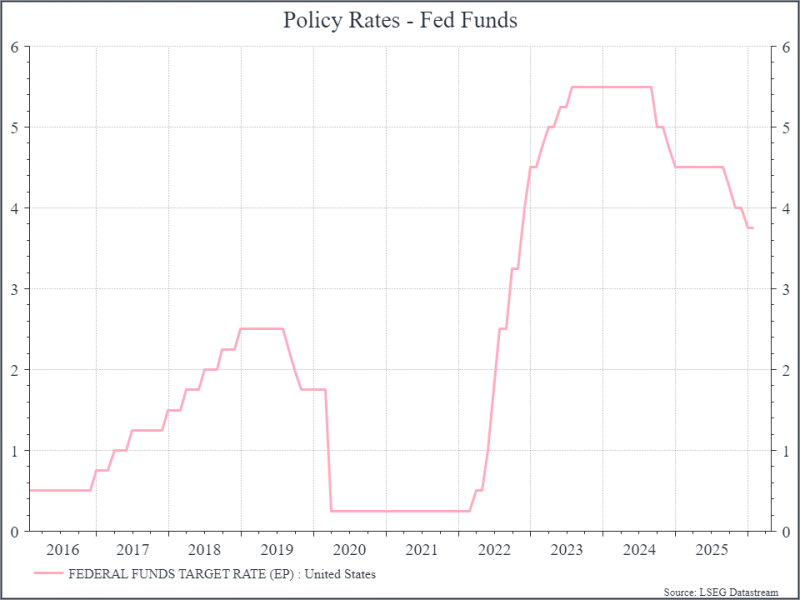
Getting into the weeds, we think the changes in the Fed’s statement were interesting, when compared to the December statement. The message on the US economy was a bit more positive – with the Fed describing economic growth as “solid”. The statement also removed some comments around risks to employment that they wrote about back in December 2025.
The relationship between the US central bank and the administration has been tortured over the past year, partly because the administration believes that policy rates should be lower than they are. The Federal Reserve is officially independent as regards its conduct of monetary policy and some investors are concerned that that independence could be eroded – potentially leading to higher inflation. This latest decision and statement from the Fed suggests that they believe the economy is in decent health and, with inflation still above target, the case to cut rates sharply from here isn’t particularly strong.
The President nominated Kevin Warsh as the next Chair of the Federal Reserve on Friday, replacing Jerome Powell whose term as Chair ends in May. On balance we think investors would be reassured, given his previous experience. But it’s not clear that Warsh would be in favour of an aggressive easing of monetary policy.
During the financial crisis, he was apparently concerned about the aggressive quantitative easing that the Fed undertook – fearing the potential impact on inflation. For some investors, a Warsh announcement might signal slightly higher policy rates and a stronger dollar. Whoever is nominated will need to be confirmed by the Senate, and we’ll get a chance to hear their views on Fed independence and monetary policy.
*As with all investing, financial instruments involve inherent risks, including loss of capital, market fluctuations and liquidity risk. Past performance is no guarantee of future results. It is important to consider your risk tolerance and investment objectives before proceeding.